Built to Last: Fiber Cement Siding for Washington, Washington, DC

Engineered to outlast ordinary siding by decades. Fire-rated, rot-free, and built for whatever Washington, DC weather delivers.

Schedule Your Free Assessment: +1-844-782-0929
Fire Rated Rot Resistant Wind Tested

Material Matters

Why Fiber Cement Outperforms in Washington, DC

Fiber cement starts with a formula, not a price point. Its triple-component engineering gives it properties that single-material siding cannot match, regardless of how well it is installed.

⚙

Composition: Three Materials, One Superior Product

Each fiber cement panel begins with Portland cement as its structural foundation. Fine silica sand is added for density and surface stability, and cellulose fiber reinforcement distributes stress across the panel so it flexes slightly without fracturing. This engineered composition is why fiber cement panels maintain their shape and finish over decades where wood warps and vinyl creeps.

🔥

Fire Resistance: Class A Rated from the Start

Fiber cement siding carries a Class A fire resistance rating from the American Society for Testing and Materials. Class A is the highest rating available for exterior cladding, indicating that the material resists flame spread, limits heat release, and does not self-ignite under standard test conditions. In Washington, DC, where many areas face seasonal fire risk or strict building code requirements, a Class A-rated exterior can be the difference between a home that survives and one that does not. Vinyl siding melts in as little as 160 degrees. Wood ignites. Fiber cement holds.

📏

How Fiber Cement Handles Washington, DC Temperature Swings

Dimensional stability measures how much a material moves in response to temperature and humidity changes. Fiber cement scores exceptionally well by this measure because Portland cement, its primary ingredient, simply does not flex the way thermoplastics or wood grain do. In practical terms, this means the panels you see installed the day of completion look virtually the same five years later, and the gaps your installer set between panels remain consistent rather than opening up or closing over seasonal cycles.

Compare the Options

Why the Comparison Consistently Favors Fiber Cement

Sticker price is only one piece of the siding equation. When you look at lifespan, maintenance cost, fire rating, and durability, fiber cement's total cost of ownership is competitive with or lower than materials that appear less expensive upfront.

Category Fiber Cement Vinyl Wood Aluminum
Typical Lifespan 40-50 Years 15-25 Years 10-20 Years 20-40 Years
Fire Rating Class A Not Rated / Melts Combustible Not Rated
Rot / Pest Resistance Fully Resistant Resistant Vulnerable Resistant
Maintenance Required Low — Repaint Every 10-15 Yrs Near Zero High — Annual Painting / Staining Low — Periodic Repainting
Paint Durability Exceptional Paint Adhesion Limited Options Moderate at Best Moderate
Impact Resistance Excellent Low — Cracks in Cold Moderate Moderate — Dents Easily

What Sets Our Installs Apart

Why Washington, DC Homeowners Call Fiber Cement Siding First

🏆

Factory-Trained Installation Team

We maintain current fiber cement installation certifications so your manufacturer warranty is protected throughout the product's rated service life.

🌎

Climate Knowledge for Washington, DC

We understand how Washington, DC's seasonal cycles affect exterior materials and select products, finishes, and installation methods that perform through your region's specific demands.

✏

Precision Cutting and Fitting

Cutting fiber cement incorrectly creates silica dust, irregular edges, and gaps that allow moisture infiltration. Our installers use established field-cut methods that keep the work site safe and the finished installation tight.

📋

Your Warranty, Protected

Manufacturer warranties on fiber cement can last 30 years or more, but only when the product is installed per published specifications. We follow those specs to the letter so homeowners can count on their warranty when they need it.

Our Services

Fiber Cement Siding Services from Fiber Cement Siding

Fiber Cement Siding provides fiber cement services across the full range of styles and project scopes available in the Washington area.

Fiber Cement Panel Installation

Fiber Cement Installation

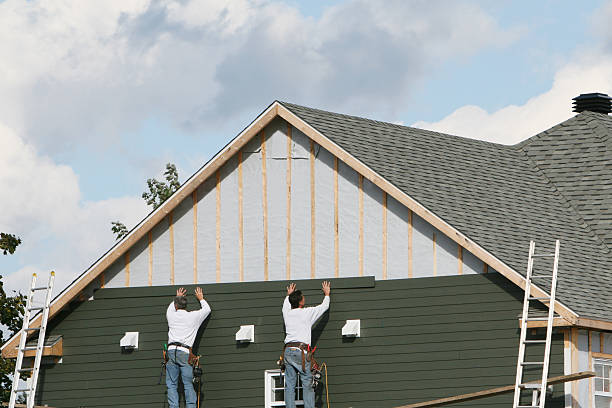
Complete fiber cement siding installation for new construction and re-siding projects. Our crew manages material handling, substrate prep, and precise panel application from the first course to the ridge.

Board and Batten Siding

Vertical Board and Batten Install

Vertical board-and-batten style in fiber cement delivers a distinctive look with none of the maintenance wood demands. We cut and fit each board and overlay batten to achieve clean, consistent spacing across your entire facade.

Fiber Cement Repair and Panel Replacement

Fiber Cement Panel Repair

Isolated fiber cement panel damage is contained quickly when handled by an experienced crew. We source matching profiles, handle field cuts, and integrate replacements with the existing installation so the repair is invisible from the street.

Primed Fiber Cement Ready for Paint

Primed for Paint Finish

Factory-primed fiber cement is one of the best paint substrates available for exterior use. We ensure all panel edges receive field primer before installation, all penetrations are caulked with paintable sealant, and the finished surface is fully prepared for your chosen topcoat color.

Shingle Style Fiber Cement Siding

Staggered Shingle Application

Fiber cement shingle panels replicate the texture and shadow lines of hand-split cedar shakes without the rot, pest, and fire risks that come with real wood. We install shingle-style panels with staggered coursing for a natural, layered appearance that holds its look for decades.

Step by Step

The Fiber Cement Siding Fiber Cement Process

We follow a consistent installation process on every fiber cement project in Washington to protect your home, your warranty, and your investment from day one.

1

Estimate and Material Specification

A thorough site visit and material specification meeting ensures you know exactly what product is going up and why. We discuss exposure width, profile style, color strategy, and warranty terms before any work begins.

2

Old Material Removal and Prep

Proper substrate preparation is what makes a fiber cement installation last. We pull existing cladding, check every sheathing panel, add or repair housewrap as needed, and make sure the surface receiving the new panels is clean, flat, and dry.

3

Setting Panels to Spec

Panel installation follows the manufacturer's approved sequence: starter strip, first course alignment, field panel installation per fastening schedule, corner and trim integration, and joint treatment with approved caulk. We document our nailing pattern and product codes as the job progresses.

4

Final Inspection and Paint Confirmation

We conduct a final walk-through inspection before leaving your home, confirming all joints are sealed, all cut edges are primed, all trim and corner boards are tight, and the paint or factory finish is ready for its topcoat. You receive documentation of the completed installation including product specifications.

Fiber Cement Siding in Washington, DC: What Every Homeowner Should Know Before They Decide

Portland cement forms the backbone of every fiber cement panel, and that matters enormously for homeowners evaluating long-term exterior performance. Cement does not absorb water the way wood does. It does not provide food for insects. It does not shrink when it dries or swell when it rains. When sand aggregate and cellulose fiber are added to that cement matrix during the manufacturing process, the result is a panel that behaves more like thin masonry than traditional cladding, offering durability properties that are genuinely different in kind from vinyl or wood alternatives.

In Washington, DC, where seasonal conditions can drive significant swings in temperature and humidity, fiber cement's dimensional stability is one of its most practically important advantages. Vinyl siding expands and contracts with temperature at a rate that is roughly four times higher than fiber cement. In practice, this means vinyl panels can develop visible gaps in cold weather and visible bowing in summer heat, particularly on south-facing and west-facing wall exposures where direct sun drives surface temperatures well above ambient air temperature. Fiber cement panels, by contrast, move very little across a full seasonal cycle. The gaps set at installation remain consistent, the panels stay flat, and the fasteners stay firmly seated rather than being cycled loose over years of thermal movement.

The Class A fire resistance rating that fiber cement carries is worth understanding beyond the label. Under ASTM E84 testing, the standard fire test for building materials, a Class A rating means a material resists sustained flame spread and produces minimal smoke during fire exposure. Fiber cement earns this rating not through a chemical fire-retardant additive but through the inherent incombustibility of its primary ingredient, Portland cement. The cement matrix simply does not burn. Only the cellulose fiber content is combustible, and it is present in low enough concentration that the panel as a whole does not sustain a flame. For homes in Washington, DC that face either wildfire exposure risk or strict local fire code requirements, a Class A exterior cladding can be a significant practical and insurance consideration.

The painting requirements for fiber cement are also more specific than some homeowners expect. Factory-primed fiber cement requires all field-cut edges to be primed with an approved primer before the panel is installed, not after. All joints and penetrations must be caulked with a paintable, paintable elastomeric sealant rated for exterior use. The topcoat itself must be a quality 100-percent acrylic exterior latex. Applied correctly, this paint system bonds to fiber cement exceptionally well and can last ten to fifteen years before recoating is needed. Applied incorrectly, paint on fiber cement will peel within a few years regardless of how good the underlying panel is. Choosing an installer who understands and follows these paint requirements is as important as choosing the right siding product.

For homeowners comparing fiber cement to other premium siding options, the useful comparison is not just product cost per square foot but total cost over a realistic ownership period. Fiber cement's higher installation cost compared to vinyl is offset over time by its dramatically longer service life, significantly lower maintenance frequency, and the absence of the kind of panel replacement events that wood siding commonly requires due to rot, insect damage, or UV degradation. Over a forty-year ownership period, a fiber cement exterior typically requires painting twice. A wood exterior might require painting every three to five years, pest treatment, rot repair at lower courses, and partial or full replacement at least once. When those maintenance costs are projected over the same forty-year period, fiber cement's total cost of ownership is generally lower, in addition to providing superior fire protection and a better appearance throughout its service life.
From Washington Homeowners

Real Reviews from Washington, DC Homeowners

★★★★★

“We had three contractors look at our home before choosing Fiber Cement Siding. They were the only crew who specifically explained the edge priming requirement and showed us the fastener schedule they would follow. The installation was clean, the panels fit tight, and the whole project wrapped up exactly when they said it would.”

DC Homeowner

★★★★★

“I hired Fiber Cement Siding to re-side my home with fiber cement shingles after a competitor gave me a bid that did not include edge priming. Fiber Cement Siding caught that gap immediately when I mentioned it and explained exactly why that shortcut matters for long-term performance. The installation they delivered was as thorough as their explanation.”

Property Owner, Washington DC

★★★★★

“Fiber Cement Siding replaced rotted wood siding on our older home with fiber cement and the transformation was remarkable. They found and repaired sheathing damage we did not know we had before the first panel went up. The project came in on budget and on schedule and the result looks like a completely different house in the best possible way.”

Fiber Cement Client in Washington

FAQ

Your Fiber Cement Questions, Answered

For most homeowners in Washington, DC, fiber cement's higher upfront cost is offset by a longer service life and significantly lower maintenance requirements over a thirty to fifty year ownership period. Vinyl typically lasts fifteen to twenty-five years before replacement is needed and may require panel replacement from impact damage in the meantime. Fiber cement in good condition with periodic repainting can serve a home for four to five decades. When you factor in the cost of one or two vinyl replacement cycles, plus the maintenance avoidance fiber cement provides, the total cost picture often favors fiber cement over any ownership period exceeding about fifteen years.

Fiber cement comes in two forms: factory-primed and ready-to-paint, or pre-finished with a factory paint coat already applied. Factory-primed fiber cement needs to be painted after installation, typically within the manufacturer's specified window, using a quality exterior acrylic latex product. Pre-finished fiber cement comes with a paint coat that is baked on under controlled factory conditions and may last fifteen years or more before a refresh coat is needed. Either way, the maintenance interval for fiber cement paint is substantially longer than for wood siding, which is one of the practical advantages that makes fiber cement's maintenance cost significantly lower over a full ownership period.

Fiber cement siding installed correctly and maintained with periodic repainting can realistically serve a home for thirty to fifty years. Manufacturer warranties on major fiber cement products run thirty years or more, which is the most direct statement of expected service life from the companies that make and guarantee these products. Real-world installations in varied climates have demonstrated performance well within this range when installed with correct moisture barrier integration, proper fastening, and a maintained paint schedule. The material itself does not rot, does not support insect infestation, and does not degrade from UV exposure the way wood or vinyl do, which means the main maintenance variable over its life is repainting rather than material replacement.

The Class A fire resistance rating that fiber cement carries is the highest classification available for exterior building materials under ASTM E84 testing, the standard protocol used by building code officials across Washington, DC. This rating means that fiber cement resists sustained flame spread and produces minimal smoke during fire exposure. The rating comes from the material's composition, not from a chemical additive, which means it cannot be removed by weathering or age. Portland cement, the primary ingredient, simply does not combust. For homes in wildfire-adjacent areas of Washington, DC, or in neighborhoods where fire could spread between structures, a Class A exterior cladding is a meaningful structural protection.

We recommend full removal of existing siding before fiber cement installation on most projects. Fiber cement adds meaningful weight to the exterior wall assembly, and installing it over existing material means installing it over a substrate you cannot fully inspect or prepare. The risk of concealed moisture damage under old siding is real, especially in older homes in Washington, DC where weather sealing may have been marginal for years. We include substrate inspection and repair as a standard part of every fiber cement project because what we find behind old siding consistently proves the value of that step.

In DC, as in all states, fiber cement installer certification is the clearest signal that a contractor has met a manufacturer's published competency threshold for installing their product. This matters for warranty protection: major fiber cement manufacturers require installation by trained or certified contractors as a condition of their warranty coverage. Beyond warranty protection, certified installers understand the specific requirements of this material, including silica dust control during cutting, fastener schedule compliance, edge priming protocols, and moisture barrier integration, all of which distinguish a sound thirty-year installation from one that begins showing problems in year seven.

Your Premium Exterior Begins Here

Start Your Fiber Cement Project in Washington, Washington, DC Today

Fiber Cement Siding brings certified fiber cement installation to Washington, Washington, DC. Call today and a project specialist will schedule a free on-site assessment and written estimate for your home.

Get Your Free Quote: +1-844-782-0929

Our Services in Washington, DC

Get a Quote
Washington, D.C., formally the District of Columbia and commonly called Washington or D.C., is the capital city of the United States. The city is located on the east bank of the Potomac River, which forms its southwestern border with Virginia and borders Maryland to its north and east. The city was named for George Washington, a Founding Father, victorious commanding general of the Continental Army in the American Revolutionary War and the first president of the United States who is sometimes referred to as "Father of his country". The district is named for Columbia, the female personification of the nation.

Zip Codes in Washington, DC that we also serve: 20250 20010 20011 20012 20015 20520 20064 20418 20415 20388 20319 20020 20024 20510 20515 20591 20427 20422 20542 20540 20240 20245 20390 20005 20004 20003 20002 20001 20009 20008 20016 20317 20059 20057 20052 20017 20018 20565 20566 20560 20220 20551 20019 20230 20373 20260 20007 20006 20032 20036 20037 20204 20431 20045 20408 20535 20530 20013 20022 20026 20027 20029 20030 20033 20035 20038 20039 20040 20042 20043 20044 20047 20049 20050 20053 20055 20056 20058 20060 20061 20062 20063 20065 20066 20067 20068 20069 20070 20071 20073 20074 20075 20076 20077 20078 20080 20081 20082 20090 20091 20201 20202 20203 20206 20207 20208 20210 20211 20212 20213 20214 20215 20216 20217 20218 20219 20221 20222 20223 20224 20226 20227 20228 20229 20232 20233 20235 20237 20238 20239 20241 20242 20244 20251 20252 20254 20261 20262 20265 20266 20268 20270 20277 20289 20299 20301 20303 20306 20310 20314 20318 20330 20340 20350 20355 20370 20372 20374 20375 20376 20380 20389 20391 20392 20393 20394 20395 20398 20401 20402 20403 20404 20405 20406 20407 20410 20411 20412 20413 20414 20416 20417 20419 20420 20421 20423 20424 20425 20426 20428 20429 20433 20434 20435 20436 20437 20439 20440 20441 20442 20444 20447 20451 20453 20456 20460 20463 20468 20469 20470 20472 20500 20501 20502 20503 20504 20505 20506 20507 20508 20509 20511 20521 20522 20523 20524 20525 20526 20527 20528 20529 20531 20533 20534 20536 20537 20538 20539 20541 20543 20544 20546 20547 20548 20549 20552 20553 20554 20555 20557 20559 20570 20571 20572 20573 20575 20576 20577 20578 20579 20580 20581 20585 20586 20590 20593 20594 20597 20599 56901 56902 56904 56908 56915 56920 56933 56935 56944 56945 56950 56965 56967 56972 56998 56999

Cities Close To Washington, DC That We Also Serve


Fiber Cement Siding Express #1
★ 4.9 (120+ Reviews)
Dispatch Center, DC
Call +1-844-782-0929
Fiber Cement Siding Express #2
★ 4.9 (120+ Reviews)
Dispatch Center, DC
Call +1-844-782-0929
Fiber Cement Siding Express #3
★ 4.9 (120+ Reviews)
Dispatch Center, DC
Call +1-844-782-0929
Fiber Cement Siding Express #4
★ 4.9 (120+ Reviews)
Dispatch Center, DC
Call +1-844-782-0929
Fiber Cement Siding Express #5
★ 4.9 (120+ Reviews)
Dispatch Center, DC
Call +1-844-782-0929
Fiber Cement Siding Express #6
★ 4.9 (120+ Reviews)
Dispatch Center, DC
Call +1-844-782-0929
🟢 Techs On Duty in Washington, DC Call +1-844-782-0929